Avoid the Crowds: Bottom Bay vs. The West Coast in 2026
As 2026 unfolds, the landscape of Barbadian tourism is reaching a significant crossroads. For decades, the calm waters of the West Coast have been the default for luxury seekers, but a shift in island density and infrastructure projects is rerouting savvy travelers toward the rugged, untouched beauty of St. Philip. In 2026, the definition of luxury is no longer just high-end service; it is the luxury of space and seclusion. The traditional strongholds of Holetown and Speightstown are grappling with their own success, while the windward coast offers a starkly different rhythm for those willing to navigate the island’s limestone interior.
The Mega-Ship Surge: Navigating ‘Gold Days’ on the West Coast
The 2026 projections from the Bridgetown Cruise Terminal indicate a record-breaking year for maritime arrivals. The introduction of several high-capacity mega-ships into the Southern Caribbean circuit has fundamentally altered the daily population of the island’s leeward side. On peak “Gold Days”—typically Wednesdays and Thursdays—the West Coast is projected to experience a 25% increase in day-tripper density compared to 2024 data. This influx concentrates primarily on Carlisle Bay and Holetown, where the infrastructure for mass excursions is most established.
For the independent traveler, these Gold Days result in a palpable shift in atmosphere. Beach clubs that once felt exclusive now operate at maximum capacity, with wait times for seaside dining often exceeding an hour. The noise profile of the West Coast has also evolved; the gentle lap of the Caribbean Sea is frequently punctuated by the mechanical hum of jet skis and the choreographed music of organized shore excursions. In contrast, Bottom Bay remains largely omitted from these large-scale itineraries due to the logistical difficulty of transporting hundreds of passengers down the narrow stone stairs and the inherent risks of the Atlantic surf.
| Metric | West Coast (Holetown/Carlisle) | East Coast (Bottom Bay) |
|---|---|---|
| Cruise Passenger Density | High (3,000+ per beach) | Negligible (<50 per beach) |
| Wait Time (Dining/Rentals) | 30 – 60 Minutes | N/A (Self-Sustained) |
| Noise Level | High (Music/Watercraft) | Low (Natural Atlantic Surf) |
| Available Shade | Paid Umbrellas (Limited) | Natural Palms (Free) |
West Coast Coastal Engineering: The 2025-2026 Disruptions
Beyond the sheer volume of visitors, the West Coast is currently undergoing a period of necessary but disruptive activity. Throughout 2025 and early 2026, the Holetown and Mullins areas have seen significant heavy machinery presence due to major hotel developments and coastal infrastructure repairs following Hurricane Beryl. While the Coastal Zone Management Unit (CZMU) continues to advance its Climate Resilient shoreline protection plans—with contractor bidding phases active in early 2026—the immediate landscape has been defined by these concurrent construction efforts, involving temporary fencing and intermittent restricted beach access.
Travelers who have historically frequented the “Platinum Coast” may find their favourite stretches of sand occupied by yellow excavators rather than sun loungers. This cycle of maintenance and development is a stark reminder of the fragility of the leeward coast. Conversely, the geology of Bottom Bay provides a natural defense. The high coral cliffs and deep-set bay mean that the area is exempt from major engineering disruptions. It offers a static, reliable landscape where the only changes are dictated by the tide rather than a construction schedule. For those planning a visit, understanding Barbados ocean safety is paramount, as the lack of construction is matched by a lack of lifeguards.
West Coast: The Construction Cycle
Expect intermittent noise and restricted access in Holetown and Mullins through late 2026. Driven by major hotel redevelopments and Highway 1 infrastructure upgrades, these projects disrupt the visual and acoustic tranquility of the traditional tourist hubs.
St. Philip: The Natural Sanctuary
Bottom Bay remains a masterclass in natural coastal resilience. Shielded by high limestone formations, it offers a consistent backdrop of swaying palms and turquoise water, entirely free from industrial intervention.
The East Coast Alternative: St. Philip’s Untouched Charm
The geographic separation of the island’s eastern parishes acts as a filter. While the South and West coasts are easily serviced by the Bridgetown port, the journey to St. Philip requires a deliberate effort. This distance is the primary reason Bottom Bay remains quiet even during the busiest cruise dates. In 2026, the contrast is visual and visceral. On the West, you see a horizon dotted with catamaran sails and cruise ship funnels; at Bottom Bay, you see the unbroken line of the Atlantic.
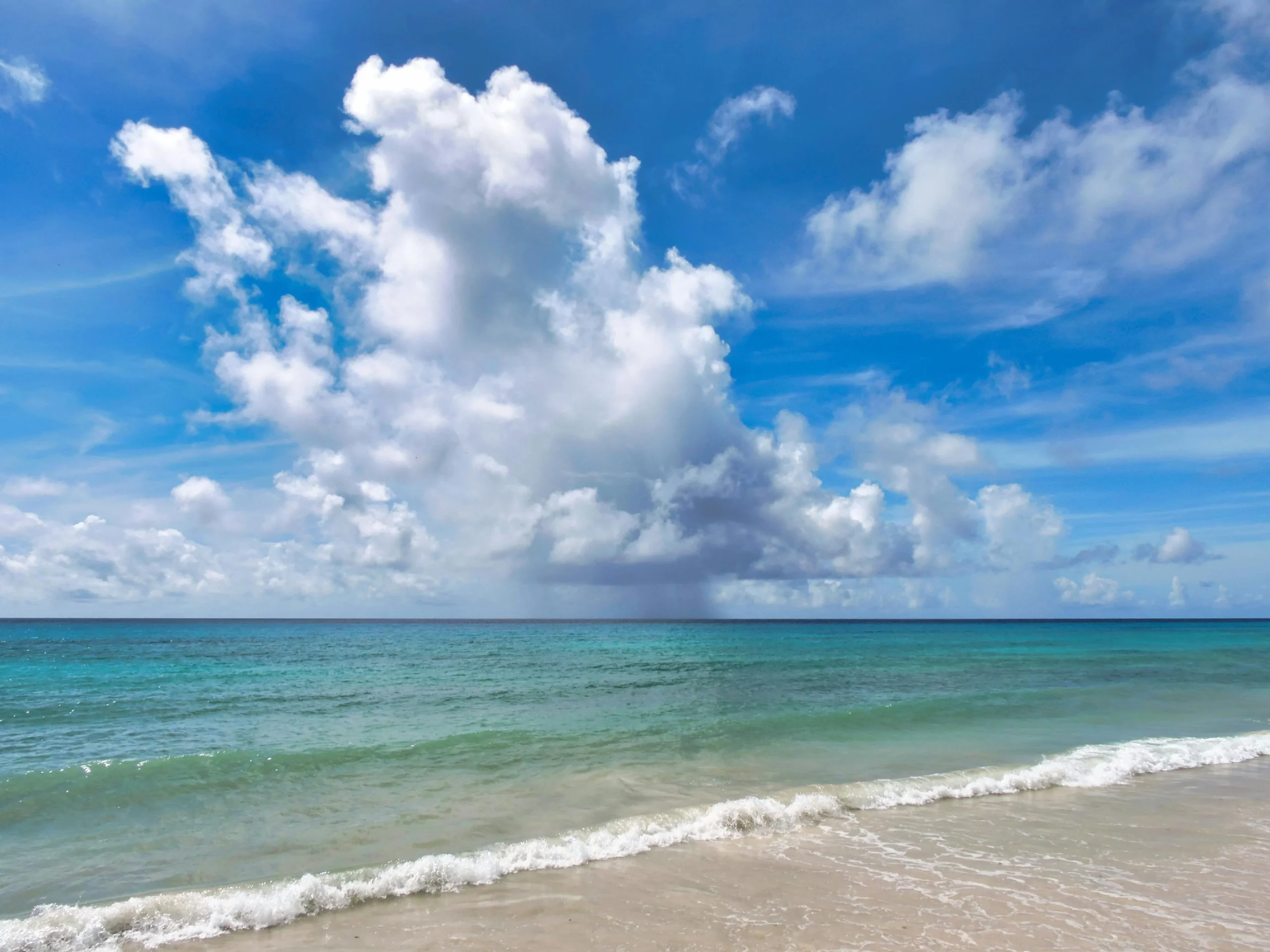
The visual composition of Bottom Bay—deep turquoise water framed by the white spray of the Atlantic—is a result of the unique bathymetry of the St. Philip coast. The water is oxygenated by constant wave action, giving it a clarity and brilliance that differs from the calmer, greener tones of the Caribbean side. Visitors should be aware that the stone stairs, the only access point to the sand, are steep and uneven. Despite occasional local efforts to clear debris, the descent remains a rugged transition compared to the paved beach walks of the West, and caution is advised for those with limited mobility.
“In 2026, peak days at the Bridgetown Cruise Terminal will see a 22% increase in day-tripper density. Bottom Bay remains the ultimate escape because its rugged descent and Atlantic currents keep the mega-ship crowds at bay.”
The ‘Wyndham Effect’: Luxury Growth Without the Crowds
A significant change in the St. Philip demographic has arrived with the operational maturity of the Wyndham Grand Barbados Sam Lord’s Castle. This 422-room resort has introduced a new luxury tier to the East Coast, yet it has not saturated the local beaches. This is largely due to the “managed beach” culture of the resort. Most guests opt for the on-site amenities, sprawling pools, and the safety of the resort’s immediate shoreline rather than making the hike to Bottom Bay. For the independent traveler, this is the ideal scenario: the presence of the resort has increased the frequency of the local “ZR” bus runs and improved the general road infrastructure in St. Philip, but the beaches themselves remain sparsely populated. You can learn more about navigating these local routes in our guide to public transport.
The site of Sam Lord’s Castle itself is steeped in a dark maritime history. Samuel Hall Lord, a 19th-century pirate, allegedly used lanterns hung in coconut trees to lure ships toward the treacherous reefs, plundering the wrecks that followed. While the original Regency-style mansion was lost to fire in 2010, the new development has been constructed around the historical shell, preserving the “haunted” aesthetic that defines the area. This proximity to history, combined with the comprehensive sustainability initiatives within the resort, makes St. Philip a destination for the “thinking traveler”—someone who values the intersection of historical narrative and environmental preservation over the curated simplicity of the West Coast beach clubs.
Seclusion by Design: Why the Resort Crowd Stays Put
Logistics play a major role in maintaining Bottom Bay’s seclusion. While the Wyndham and The Crane Resort are nearby, the physical effort required to reach Bottom Bay—parking on the cliff-top, navigating the stairs, and carrying all necessary supplies—acts as a natural deterrent for the casual resort guest. There are no commercial rentals, no bars, and no public facilities at Bottom Bay. This lack of infrastructure is its greatest protection. If you are planning a day trip, you must consult our Logistics & Safety page to ensure you are fully prepared for a self-sustained visit.
For those staying in the parish, the benefit is the ability to enjoy world-class infrastructure at night while having access to “wild” Barbados by day. The 2026 Sargassum forecast suggests a “moderate to high” influx from March to June. Visitors should note that the East Coast is a catchment area during these months. However, the high cliffs allow you to check beach conditions before descending—unlike the flatter beaches of the South Coast, such as Long Bay. This wild, unmanicured landscape is another reason why the East Coast is becoming the preferred choice for those who want an authentic, rather than a managed, tropical experience. If you are driving from the West or South to experience this, be sure to review our driving tips for Barbados to navigate the roundabouts of the ABC Highway efficiently.
Nearby Regional Highlights
A visit to Bottom Bay is best paired with an exploration of the wider St. Philip parish. Approximately five kilometres away lies The Crane Resort, a property with a historical pedigree dating back to 1887. It is the oldest continuously operating hotel in the Caribbean and offers a fascinating contrast to the wildness of Bottom Bay. The beach at The Crane is internationally famous for its distinct pink hue, a phenomenon caused by the pulverization of red coral and foraminifera shells. Visitors can access the beach via a unique glass-fronted elevator that descends the 80-foot cliff, providing a panoramic view of the Atlantic that is unmatched on the island.
Further along the coast, the Sam Lord’s Castle site offers a glimpse into the island’s piratical past. While the modern Wyndham Grand Barbados resort now operates on the grounds, the ruins of the original mansion remain a visible historical landmark. The area is also known for its sustainability initiatives and efforts to protect the local turtle nesting grounds along Long Bay. For a complete day out, walking the rugged cliff-top trails near Bottom Bay (such as the path to Harrismith Beach) offers some of the most dramatic sunrise photography opportunities in the Caribbean. For more details on building your itinerary, visit our Nearby Attractions guide.
Frequently Asked Questions: 2026 Travel
- What are ‘Gold Days’ in Barbados? These are peak cruise arrival days, typically Wednesdays and Thursdays, when the arrival of multiple “Icon-class” mega-ships causes a 25% increase in tourist density at West Coast beaches like Carlisle Bay.
- Is Bottom Bay affected by the West Coast construction projects? No, the Coastal Zone Management Unit (CZMU) projects are localized to the leeward coast for beach nourishment and groyne maintenance, leaving the East Coast naturally preserved.
- Can I swim at Bottom Bay in 2026? While the water is visually stunning, the Atlantic currents are powerful and unpredictable. We strongly recommend staying in waist-deep water and never swimming alone, as there are no lifeguards on duty.
- How do I get to the East Coast to avoid traffic? The best method is a rental car via the ABC Highway and then through the interior of St. Philip. For those without a car, white “ZR” buses (Route 12A) depart frequently from the Constitution River Terminal in Bridgetown for a flat fare of BDS $3.50.
- Are there facilities or shade at Bottom Bay? Unlike the West Coast, Bottom Bay has no commercial rentals or public toilets. Access to the beach remains free. Visitors must bring their own water and food, and utilize the natural shade provided by the coconut palms.

Barbados Island Tour, Monkey Watching & Swimming with Turtles
Are you ready for a fun day in Barbados? This full day lunch inclusive tour starts its day with the monkey at the Barbados Wildlife Reserve after the monkeys…

6- Hour Coastal Tour of Barbados with Drinks, Snacks and Lunch
Join our 6 hr expedition in our open vehicles where we share lots of history, geography, culture and some bajan humor as we make our way around the island ex…

Barbados Highlights and Rum Tour
Take a journey through Bridgetown up the West Coast of Barbados on our way to the beautiful views of Cherry Tree Hill. Visit the coastal community of Bathshe…

A Good Bajan Day – Bestselling Barbados Highlights Tour
Discover Barbados!Visit: – Bridgetown – Rihanna Drive – West Coast – Bathsheba – Animal Flower Cave (Public Areas) – Speightstown (Lunch not included)Enj…

Snorkelling and Scenic Beauty tour of Barbados
Embark on an unforgettable journey through Barbados, discovering its natural wonders, rich history, and vibrant culture. From snorkelling in crystal-clear wa…

Natural Wonders of Barbados Small-Group with Harrison’s Cave
Experience the Island’s natural wonders and visit the popular Harrison’s Cave. At Harrison’s Cave board electric trams and travel through the winding tunnels…