Bottom Bay offers a profound departure from the bustling beach clubs of the South and West coasts. Here, the experience is defined by the “Doctor’s Breeze”—the constant, salt-laden Atlantic trade winds that provide a natural therapeutic cooling effect and a distinct, refreshing scent unique to the parish of St. Philip. The vibe is one of rugged, cinematic isolation where the roar of the Atlantic surf against towering coral cliffs creates a powerful acoustic backdrop for meditation, exploration, and sensory restoration.
It is a place where time is measured by the movement of shadows across pink-tinted sands and the rhythmic swaying of a dense coconut grove.
Because the powerful undercurrents make swimming high-risk, the “activities” here shift from active water sports to high-vantage observation and coastal immersion. Whether you are perched 15 metres above the water on a limestone ledge or tucked away in a cool sea cave, the area rewards those who move slowly and observe the raw intersection of island greenery and deep blue ocean. Before you descend the stairs, ensure you have consulted our Safety & Logistics guide regarding the lack of on-site facilities.
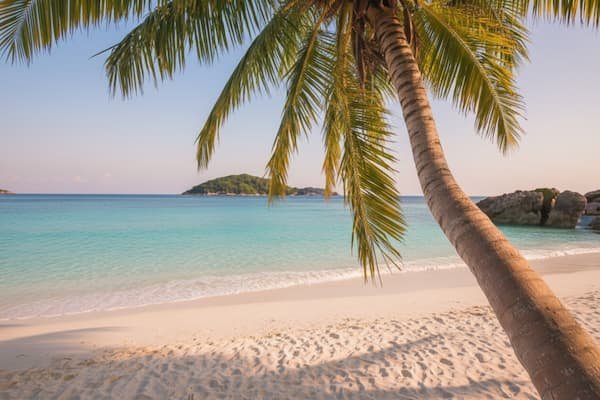
The “Lone Palm” Composition
Photographers should head directly to the southern end of the beach to find the most iconic natural frame in Barbados: a singular, leaning coconut palm that extends gracefully toward the ocean. This “Lone Palm” provides a professional-grade foreground for the turquoise waters and the dramatic cliff line in the distance. To capture the “ochre glow,” you must arrive roughly 20 minutes before dawn. This is the precise moment the rising sun hits the iron-rich limestone, turning the cliffs a deep orange that contrasts sharply with the white surf.
- The Pink Sand Phenomenon: The legendary rosy hue of the sand is most visible at the waterline during low tide. This is caused by a physical mixture of crushed white coral and the red shells of Foraminifera, microscopic sea organisms washed ashore by the Atlantic surge.
- Marine Silhouettes: From the cliff tops, the water clarity allows you to spot the dark shapes of Green and Hawksbill turtles grazing on seagrass beds, which appear as stationary dark patches in the electric blue water.
Dining Under the Palms
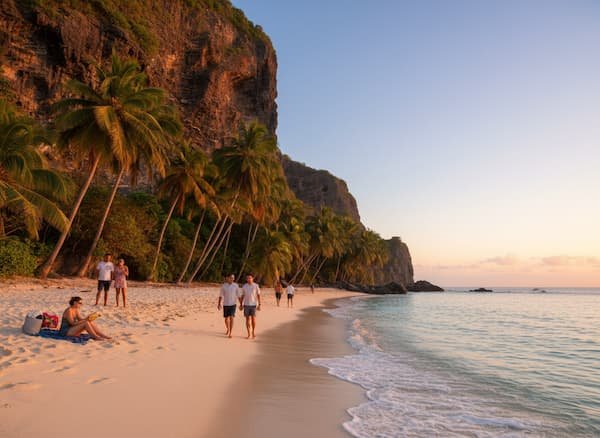
The dense grove of coconut palms at the foot of the cliffs offers a natural, shaded sanctuary. Unlike the commercialised beaches of the West, picnicking here is about total immersion in nature. Local vendors occasionally operate near the entrance, specialising in the “Bottom Bay Milkshake.” This is not a standard beverage; it involve scraping the soft, translucent “jelly” meat of a young coconut and blending it with evaporated milk, condensed milk, and a generous grating of fresh nutmeg. It is a heavy, traditional Bajan treat best enjoyed while listening to the rhythmic ‘clack’ of palm fronds.
- Green Monkey Watch: Between 6:30 AM and 8:30 AM, troops of 10–20 Barbados Green Monkeys often patrol the mahogany and wild tamarind trees lining the access path before they retreat to the cooler gullies.
- Pro Tip: There are no rubbish collection services on the sand. Ensure you pack out all waste to preserve the environment. If you are arriving by car, read our Barbados Driving Guide for parking specifics.
Limestone Ledges & Sea Caves
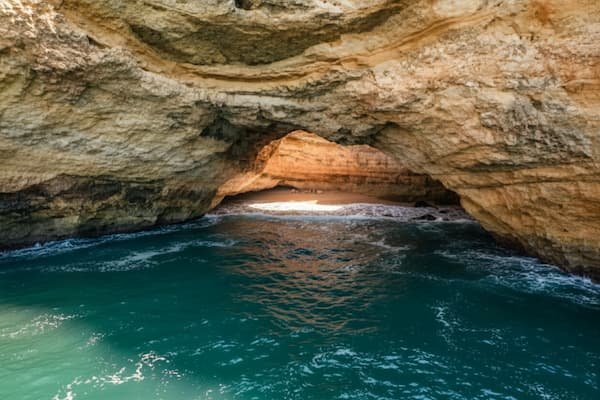
The northern boundary of the beach houses a sea-carved limestone niche that serves as a vital natural refuge. This “Secret Cave” stays roughly 5–8 degrees cooler than the open sand, making it the primary sanctuary for visitors during the peak intensity of the tropical sun between 11:00 AM and 2:00 PM. For those interested in local culture, you will often see St. Philip fishermen perched on the extreme edges of the 50-foot cliffs, practicing hand-line fishing to catch Red Snapper and Bream directly from the deep water below.
Connecting Bottom Bay to the nearby Harrismith Beach is a rugged cliff-top path known as the “Fat Pork Trail.” The trail is named after the Chrysobalanus icaco bushes that line the route, producing a white, cotton-like fruit that is a staple foraged snack for locals. Hiking this path provides a dizzying view of the Atlantic surge and is the best way to reach the Harrismith House Ruins, a 1920s coral-stone estate located just 0.3 km to the north.
- Humpback Whale Watching: Peak migration occurs between February and March. Look for the “blow” or “lobtailing” beyond the reef line.
- Flora Safety: Avoid the Manchineel trees found in the scrubland. Their small green “death apples” and sap are highly toxic; do not touch them or stand under them during rain.
Who is this for?
- Landscape photographers seeking the unique “ochre glow” of iron-rich limestone.
- Nature lovers looking for a “wild” alternative to resort-heavy beaches.
- Couples searching for a cinematic, secluded picnic location.
- Hiker enthusiasts interested in the rugged St. Philip coastline.
Essential Planning
Before heading out, ensure you understand the logistical requirements for reaching this remote parish. You can find detailed bus numbers and taxi rates in our transportation guide. Because of the Atlantic’s power, understanding rip currents and tide patterns is crucial for a safe visit; never enter the water alone at Bottom Bay as there are no lifeguards on duty.