Best Times to Visit: Weather and Seasons in the Tropics
The Statistical Advantage of 13.1° North
Barbados occupies a unique geographical position as the most easterly island in the Caribbean chain. This isolation isn’t just a matter of scenic beauty; it’s a physical shield. At 13.1° North latitude, the island sits at a critical junction where the Coriolis Force typically pushes Atlantic weather systems to curve northwest before they reach our shores. While the rest of the archipelago forms a vertical line, Barbados stands alone, often bypassed by the core of tropical depressions.
Statistically, there is a 90% probability that storms forming in the Atlantic will pass safely north of the St. Philip coast, making Barbados one of the safest bets in the hurricane belt.
For travellers planning a trip during the traditional tropical storm season (June through November), this geographic ‘buffer’ provides peace of mind that is hard to find elsewhere in the region. While no destination is immune to nature, the 13.1° advantage is a cornerstone of the island’s reliable climate. This positioning is particularly noticeable at Bottom Bay, where the horizon remains clear of landmasses, allowing the uninhibited movement of oceanic air.
The Cooling Cycle
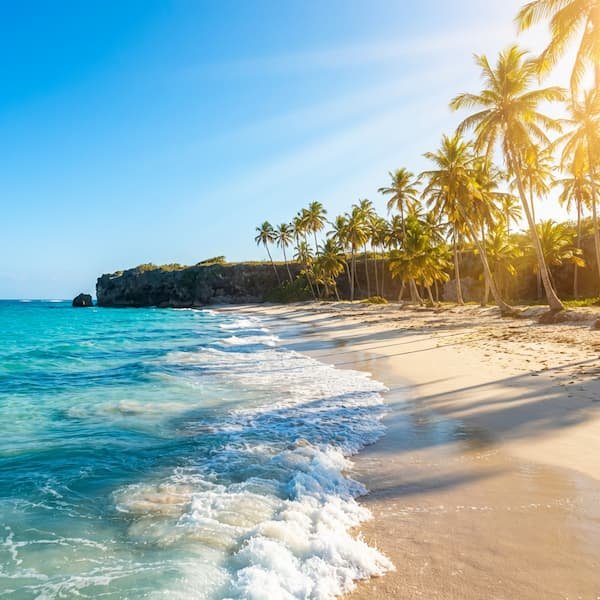
From December through February, the Northeast Trade Winds reach their peak. These consistent breezes act as nature’s air conditioning, blowing across the Atlantic at 15–20 knots. This period also marks the “Little Dry Season” in February, where the dew point drops to a comfortable 23°C (73°F), the lowest of the year.
The St. Philip Microclimate
Unlike the sheltered West Coast, the East Coast benefits from these direct winds, mitigating tropical humidity and making outdoor exploration incredibly comfortable even at midday. When the West Coast feels stagnant, St. Philip remains refreshed by a constant salt-misted breeze that keeps the 30°C heat from feeling oppressive.
| Season | Avg Temp (C/F) | Sunlight Hours | Rainfall Profile |
|---|---|---|---|
| Dry (Dec – May) | 28°C / 82°F | 8-10 Hours | Low / Short Bursts |
| Golden Window (April) | 30°C / 86°F | 9.9 Hours | Lowest Annual Average |
| Humid (Jun – Aug) | 31°C / 88°F | 8 Hours | Moderate / Tropical |
| Wet (Sep – Nov) | 31°C / 88°F | 7 Hours | Higher Humidity / Showers |
April: The Golden Window for Sunshine
If you are looking for the absolute peak of Barbadian weather, April is the winner. Statistically, April offers the highest daily duration of sunshine, averaging nearly 10 hours of clear light. This is the premier month for photography at Bottom Bay. The UV index during this “shoulder” month reaches an extreme 14, meaning a burn time of under 10 minutes for unprotected skin—use the limestone caves for natural shelter.
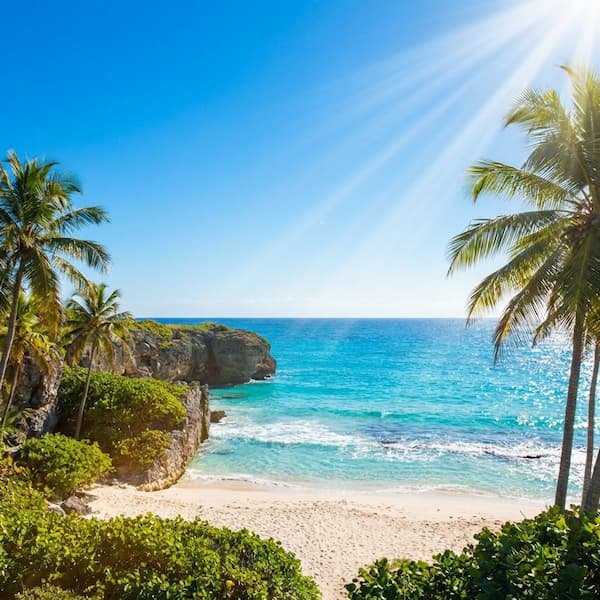
The high coral cliffs and turquoise waters are most vibrant under the direct, high-angle sun of April. For those interested in long-exposure photography of the Atlantic waves, the stability of the light during this window ensures consistent results without the interference of heavy cloud cover. Furthermore, the sea conditions often mellow during late spring, reducing the massive Atlantic swells and revealing the intricate reef patterns below the cliffs.
Understanding ‘Liquid Sunshine’
Even during the ‘wet’ season from June to November, rain in Barbados typically manifests as ‘liquid sunshine’—short, intense bursts of rain followed immediately by blue skies. It is rare to experience a completely ‘washed out’ day. However, June through August introduces the Saharan Air Layer (SAL). This Saharan dust creates a milky haze in the sky, which can mute the saturation of your photos but serves a vital purpose: it suppresses hurricane development in the Atlantic basin.
Local Tip: The rain often helps clear the air, leading to some of the most dramatic and colorful sunsets you’ll ever witness over the St. Philip cliffs.
During these humid months, luxury accommodation prices drop significantly. It is the best time to book a stay at The Crane Resort—the oldest continuously operating hotel in the Caribbean, established in 1887. Alternatively, the newly repositioned Wyndham Grand at Sam Lord’s Castle offers a gateway to the history of Samuel Hall Lord, the infamous regency-era marauder who used lanterns to lure ships onto the jagged Cobbler’s Reef.
Finding the Sun in St. Philip
Navigating to the East Coast requires a bit of planning, especially if you are coming from the cruise terminal. You can check our guide on how to get to Bottom Bay for specifics on the ‘ZR’ bus routes or rental car directions. If you choose to drive, remember that Barbadian roads are narrow and we drive on the left; review our driving guide before heading out. For a quieter alternative to Bottom Bay with a safer swimming hole, consider the short cliff walk to Harrismith Beach, where the ruins of an old Great House overlook a natural lagoon.
Weather and Seasonality FAQ
- When is the cheapest time to visit Barbados? The ‘low’ season from June to November typically offers the lowest rates for flights and villa rentals in St. Philip, coinciding with the humid summer months. While humidity is higher, the cooling trade winds at Bottom Bay make this more bearable than in the inland parishes.
- Is Bottom Bay safe to visit during the hurricane season? Yes, while you should monitor weather reports, Barbados’ eastern position makes direct hits statistically rare compared to the Northern Caribbean. However, you must always check the sea conditions on the Things to Do page, as distant storms in the Atlantic can still create dangerous rogue waves at the shore.
- Which month has the least rain? April is historically the driest month in Barbados, featuring the lowest annual rainfall averages and the highest number of daily sunshine hours. This makes it the most reliable month for those planning weddings or professional photography sessions on the beach.
- Are the trade winds too strong for sunbathing? At Bottom Bay, the eighty-foot coral cliffs provide a massive natural windbreak on the sand, ensuring your towel stays put while the palms above catch the breeze. This keeps the air circulating and prevents the heat from becoming stagnant without the nuisance of blowing sand.
- Does the weather change significantly between the West and East coasts? The East Coast, where Bottom Bay is located, is generally 1-2 degrees cooler and significantly breezier than the sheltered West Coast. This microclimate makes St. Philip a preferred location for those who enjoy active coastal hiking rather than just stationary sunbathing.
Capturing the Atlantic Backdrop
The vertical scale of the coral cliffs and the geometric symmetry of the coconut grove make Bottom Bay a frequent subject for high-resolution desktop wallpapers. If you are visiting Bottom Bay Barbados in June, you will notice the Saharan Air Layer (SAL) occasionally softening the horizon. This dust layer mutes the deep blues of the Atlantic but provides a diffused light that alters the traditional tropical aesthetic. While June marks the start of the more humid season, the constant ventilation from the trade winds prevents the heat from becoming oppressive. Keep your lens caps on. The salt-mist will coat glass surfaces in minutes.